
Blogs
Insights & Strategies for Your Financial Journey
Stay informed with expert articles, tips, and updates on retirement planning, wealth protection, business strategies, and family financial planning—designed to help you make confident financial decisions.
Are You Making These Common Succession Planning Mistakes? 12 Million Businesses Are About to Change Hands
Are You Making These Common Succession Planning Mistakes? 12 Million Businesses Are About to Change Hands.
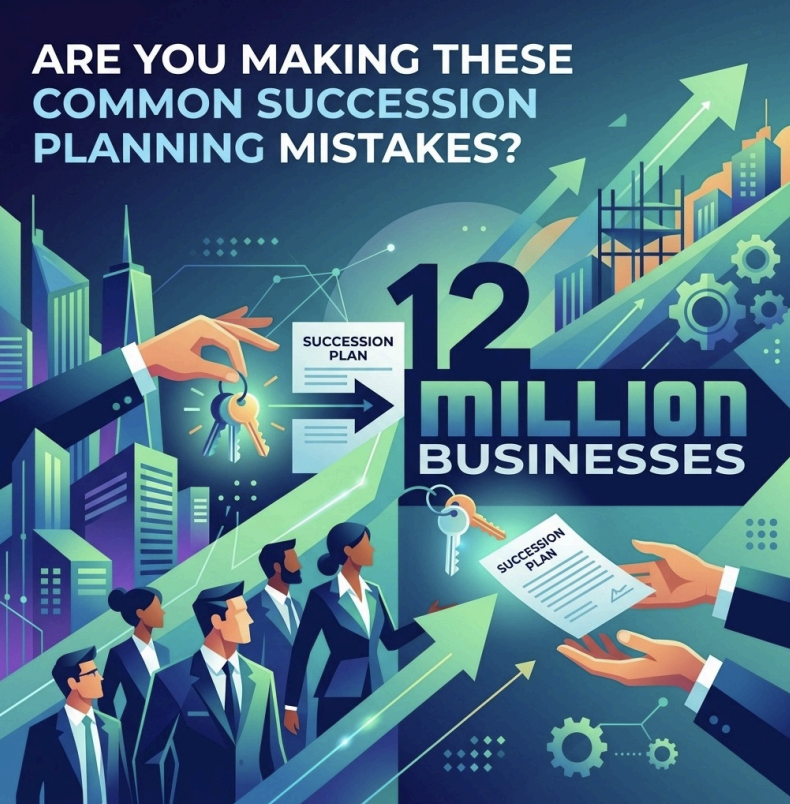
The business landscape is approaching a massive shift. Over the next decade, an estimated 12 million small and mid-sized businesses will change hands. This transition is part of a larger trend often called the "Great Wealth Transfer." For many business owners, the company represents their largest financial asset and their life’s work. However, statistics suggest that a significant number of these owners are not prepared for the transition.
Succession planning is the process of identifying and developing new leaders who can replace old leaders when they leave, retire, or pass away. It is a critical component of risk management. Without a clear strategy, a business faces uncertainty that can lower its value, alienate employees, and lead to financial loss. Despite the stakes, many organizations repeat the same errors during this process.
The Problem of Procrastination
The most frequent mistake in succession planning is waiting too long to start. Many owners view retirement as a distant event and prioritize daily operations over long-term exit strategies. Research suggests that a successful business transition often requires five to ten years of preparation. This time is necessary to groom a successor, clean up financial records, and implement tax-saving structures.
When an owner waits until they are ready to leave immediately, they lose leverage. Sudden departures due to health issues or burnout often lead to "fire sales." In these scenarios, the business is sold for much less than it is worth because the owner lacks the time to find the right buyer or fix operational inefficiencies. Starting early allows the business to run as an independent entity that does not rely solely on the founder’s presence.

Confusing a Successor with a Succession Plan
A common misconception is that identifying a person to take over is the same as having a plan. An owner might assume that a son, daughter, or long-term manager will naturally step into the leadership role. However, having a name on a piece of paper does not account for the complexities of a transfer.
A formal succession plan includes legal, financial, and operational details. It addresses how the ownership will be transferred and how the purchase will be funded. It also defines the specific milestones the successor must reach before taking full control. Without these details, the transition can lead to conflict among family members or key employees who feel overlooked. Recent surveys show that while many directors recognize the need for a plan, only about half of companies have a written document outlining the process.
The Absence of a Buy-Sell Agreement
For businesses with multiple partners, the lack of a buy-sell agreement is a major risk. This legal document acts like a "pre-nuptial agreement" for business partners. It dictates what happens to a partner’s share of the business if they die, become disabled, or decide to leave.
Without a buy-sell agreement, the remaining partners might find themselves in business with a deceased partner’s spouse or heirs. These individuals may have no interest or experience in running the company but still hold significant voting power and a claim to profits. A well-structured agreement, often funded by life or disability insurance, ensures that the remaining owners can buy out the departing partner at a fair price. This protects the continuity of the business and provides liquidity to the departing party’s family.

Focusing on Individuals Instead of Roles
Another common pitfall is trying to find a direct replica of the current owner. Many founders look for a successor who shares their exact personality and management style. This approach is often flawed because the needs of the business change over time. The skills required to start a company are different from the skills required to scale it or navigate a modern digital economy.
Effective planning focuses on the requirements of the role rather than the traits of the individual. Organizations should analyze the future strategic goals of the company and identify the competencies a leader will need to reach those goals. By focusing on the role, the talent pool expands. This allows the business to consider internal candidates who may have different perspectives but possess the necessary leadership qualities to move the company forward.
The Failure to Develop Internal Talent
Succession planning is not just about the person at the top. It is about building a "leadership pipeline" throughout the entire organization. Many businesses fail because they ignore the middle management layer. When a senior leader leaves, it creates a vacuum that ripples down through the company.
Internal talent often understands the company culture better than an outside hire. However, these employees need active development to be ready for advancement. This includes mentorship, formal training, and the gradual delegation of authority. A frequent mistake is keeping all decision-making power at the top until the very day of the transition. If a successor has never been allowed to make a mistake or manage a major project, they will not be prepared to lead when the founder departs.

Ignoring Tax and Valuation Realities
The financial side of a business exit is complex. Many owners have an inflated view of what their business is worth. They may base their retirement plans on a specific number that the market is not willing to pay. A professional business valuation is a necessary step in the planning process to ground expectations in reality.
Additionally, the way a business is sold or transferred has massive tax implications. Depending on the structure of the deal, an owner could lose a large portion of their proceeds to capital gains taxes. Strategies such as Employee Stock Ownership Plans (ESOPs) or specific trust structures can help mitigate these costs, but they must be implemented well in advance. Ignoring these factors until the closing table can result in a significant financial shortfall for the retiring owner.
WealthGuard Solutions and the Path Forward
Navigating these challenges requires a coordinated effort between financial, legal, and operational experts. WealthGuard Solutions provides customized business programs designed to help owners protect what they have built. These exit planning services go beyond simple investment advice. They focus on the holistic health of the business and the owner’s personal financial future.
The process involves assessing the current state of the business, identifying gaps in the leadership pipeline, and creating a roadmap for a smooth transition. By addressing the legal requirements of buy-sell agreements and the financial nuances of business valuations, owners can move toward retirement with confidence.

The "Great Wealth Transfer" represents a turning point for millions of American families. Those who take the time to formalize their plans will likely see their legacy continue, while those who wait may see their hard work diminish. Planning is not a one-time event but an ongoing strategy that evolves with the business.
For more information on how to begin the process, the WealthGuard Solutions services page provides an overview of available resources. Business owners can also explore the WealthGuard blog for deeper dives into specific financial strategies and market updates.
Summary of Key Steps
To avoid the common mistakes mentioned, business owners should consider the following:
1. Start the conversation early: Aim for a 5-to-10-year window before the intended exit.
2. Document the plan: Move beyond verbal agreements and create written legal and operational frameworks.
3. Secure the partnership: Implement a buy-sell agreement to handle unexpected departures.
4. Delegate authority: Give potential successors real responsibility long before the transition date.
5. Get a professional valuation: Understand the true market value of the company to ensure retirement goals are realistic.
The transition of 12 million businesses is a historic event. Ensuring a business is part of the successful half of that statistic requires action today. For those interested in professional guidance, the Wealth Guard Solutions contact page is available for direct inquiries regarding succession and exit planning.

Wealth Guard Solutions
Strategic financial solutions designed to help families and business owners grow, protect, and transfer wealth with confidence.




Quick links
Copyright 2026. Wealth Guard Solutions. Web Design by Erika Vidal Agency. All rights reserved.